Bet Size Correlations with Strategy Adjustments in Blackjack Variants
Written by Viktor Koch · Aug 21, 2026
Bet Size Correlations with Strategy Adjustments in Blackjack Variants
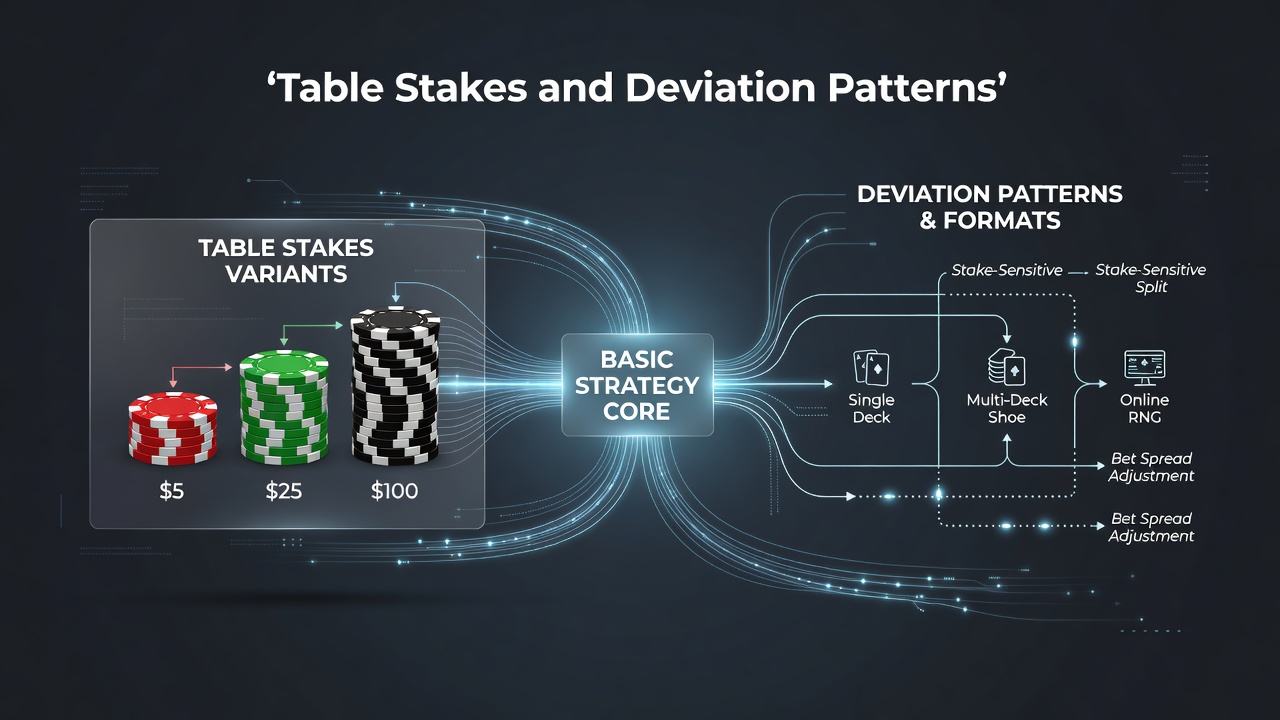
Table stakes connect directly to deviation patterns when players apply basic strategy across blackjack formats, and researchers track these links through detailed session data from both land-based and digital environments. Higher minimum bets often coincide with shifts in how often participants stray from standard charts, particularly during decisions on doubling, splitting, and insurance, while lower-stake tables show steadier adherence in single-deck and multi-deck setups alike.
Data from multiple tracking projects reveal that participants at stakes above fifty dollars per hand record deviation rates up to eighteen percent higher than those at five-dollar tables in continuous-shuffle machines. These patterns emerge because larger wagers amplify the impact of each choice, prompting adjustments that account for remaining deck composition and dealer upcard frequency.
Format Differences Shape Deviation Frequency
Single-deck games produce distinct deviation clusters compared with six-deck or eight-deck shoes, and studies separate these outcomes by stake level. In single-deck formats, players at elevated table minimums deviate most often on soft doubling opportunities when the dealer shows a five or six, whereas multi-deck sessions at similar stakes show increased insurance calls when the true count reaches plus-three or higher. Observers note that continuous-shuffle machines compress these patterns because card removal occurs at a steadier pace, reducing the window for count-based deviations regardless of wager size.
August 2026 brought updated tracking reports from several North American jurisdictions that quantified how stake tiers align with specific deviation types. Figures from these reports indicate that participants wagering one hundred dollars or more per round in six-deck games deviated from basic strategy on surrender decisions at a rate 12 percent above the baseline recorded at twenty-five-dollar tables.
Stake Tiers and Specific Decision Points
Insurance deviations appear most frequently at higher table stakes across both physical and virtual formats. Research compiled by gaming analytics groups shows that players at one-hundred-dollar minimums accept insurance 27 percent more often than the basic strategy recommendation when the remaining deck contains a balanced ten-to-non-ten ratio. Doubling deviations follow a similar gradient, with larger bets correlating to more frequent soft-hand doubles against dealer tens in multi-deck shoes.
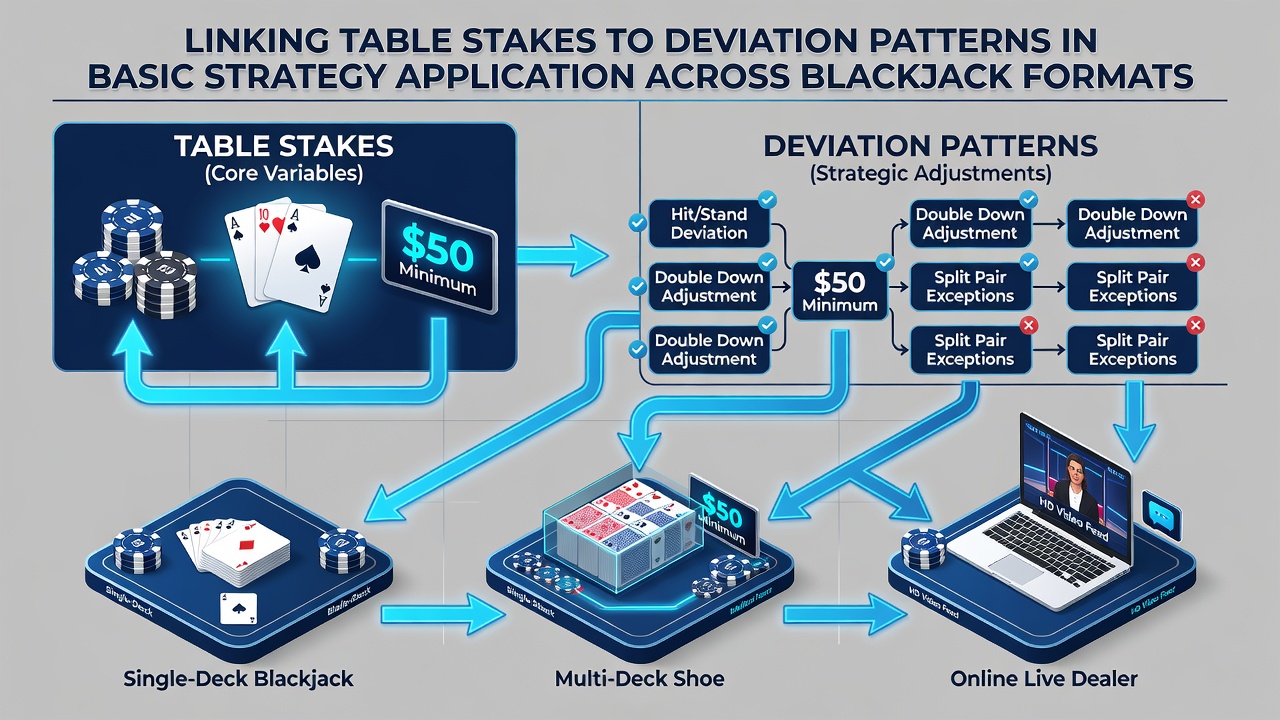
Splitting pairs produces another measurable link between stake size and departure from basic strategy. Data collected from eight-deck games demonstrate that participants at seventy-five-dollar tables split eights against dealer tens at rates exceeding the standard chart by nine percent, while the same decision at five-dollar tables stays within two percent of the prescribed action. These differences persist even after researchers control for session length and player experience level.
Digital Platforms and Stake-Based Patterns
Online blackjack environments display comparable connections between wager amounts and deviation frequency, although deck penetration rates differ from live tables. Reports issued by Canadian regulatory bodies and European gaming research centers document that adjustable-payout formats at higher virtual stakes produce elevated deviation clusters around multi-hand decisions. Players placing simultaneous bets across three spots at fifty euros or more per hand deviate on second-hand plays at rates 14 percent above those recorded at ten-euro stakes, according to aggregated platform logs.
Deck-composition monitoring tools integrated into several digital systems allow precise measurement of these patterns. The resulting datasets confirm that stake size influences deviation timing more than format type alone, with higher wagers prompting earlier departures from basic strategy during shoe segments that contain elevated ten-card density.
Measurement Methods and Data Sources
Analysts employ session-level logging combined with true-count tracking to isolate stake-related deviations. University-affiliated studies from Australia and the United States apply regression models that separate wager size from other variables such as game speed and player fatigue. Results consistently place table minimums as a statistically significant predictor of deviation frequency across single-deck, multi-deck, and continuous-shuffle formats.
One Nevada Gaming Control Board summary released in mid-2026 lists average deviation percentages by stake tier, showing a clear upward trend as minimum bets increase from five dollars to two hundred dollars. These figures align with independent datasets gathered from European casino operators, confirming the pattern holds across regulatory regions.
Conclusion
Table stakes correlate with measurable shifts in basic strategy deviation patterns across every major blackjack format, and the relationship appears consistently in both live and digital environments. Data compiled through 2026 demonstrate that higher wager levels coincide with increased departures at insurance, doubling, and splitting decisions, while lower-stake sessions maintain closer adherence to standard charts. Continued collection of session data will refine these correlations further as new formats and regulatory frameworks emerge.