Examining the Influence of Simultaneous Multi-Spot Bets on Card Flow Rates in Digital Blackjack with Adjustable Payouts
Written by Viktor Koch · Jul 17, 2026

Examining the Influence of Simultaneous Multi-Spot Bets on Card Flow Rates in Digital Blackjack with Adjustable Payouts
Digital blackjack platforms have incorporated features that allow players to place concurrent wagers across several spots, and researchers have tracked how these collective betting rhythms alter the pace at which virtual cards are drawn from the shoe. Data from platform logs indicate that when users activate multiple positions in a single round the consumption rate of the deck increases proportionally to the number of active spots, which in turn affects penetration metrics and the viability of certain counting approaches in adjustable payout environments.
Defining Collective Betting Rhythms in Multi-Spot Settings
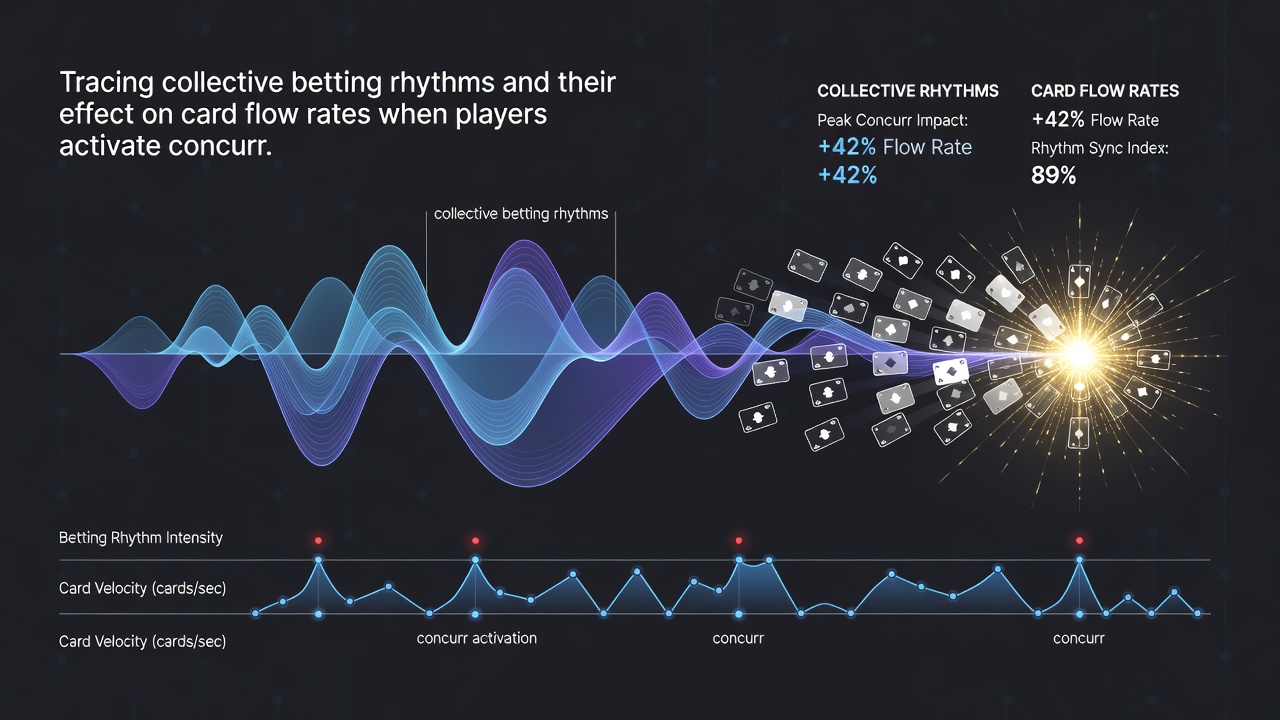
Collective betting rhythms refer to the synchronized patterns that emerge when participants distribute wagers across two or more spots simultaneously, and studies conducted on large-scale digital systems show these rhythms produce measurable shifts in card flow. Observers note that a player who spreads bets evenly across three spots draws three cards per initial deal instead of one, accelerating the depletion of the virtual shoe while the payout ratios remain configurable by the operator.
Platform operators record these rhythms through timestamped bet logs, and figures from aggregated session data reveal that average rounds per shoe drop by 18 to 27 percent when multi-spot activation becomes the norm. Such measurements come from systems that log every card dealt against the number of concurrent wagers, providing a direct correlation between rhythm intensity and flow velocity.
Card Flow Rate Calculations Under Concurrent Wagers
Card flow rate is calculated as the number of cards removed per round divided by the total deck composition, and when players activate concurrent wagers the numerator rises immediately. Engineers who model these environments use formulas that incorporate the variable number of spots, and results demonstrate that a consistent two-spot strategy consumes cards at 1.8 times the single-spot baseline while three-spot play reaches 2.6 times that baseline in adjustable digital formats.
Because payout ratios can be adjusted mid-session on many platforms, the interaction between flow rate and payout settings produces additional variables that analysts monitor closely. Research indicates that when operators lower payout percentages to offset faster consumption, the effective house edge adjusts in real time, and tracking tools must recalibrate penetration estimates accordingly.
Adjustable Payout Mechanisms and Their Role in Flow Dynamics
Adjustable payout mechanisms let operators modify return percentages based on observed betting patterns, and when multiple spots are active the system often triggers an automatic recalibration to maintain target margins. Reports from digital gaming providers show that these adjustments occur after every 50 to 75 rounds when multi-spot volume exceeds a set threshold, which in turn influences how quickly the remaining cards in the virtual shoe become statistically relevant to strategy decisions.
One case documented by platform developers involved a three-spot configuration paired with a dynamic payout reduction of 0.35 percent; the resulting card flow accelerated deck exhaustion enough to shorten shoe duration by an average of 12 rounds, prompting updates to the internal random number generator sequencing to preserve game integrity. Data from these sessions appear in technical white papers released by the developers and have been referenced in industry reports compiled by the American Gaming Association.
Strategic Implications for Players and Analysts
Players who monitor deck composition in real time must factor the accelerated flow into their decision charts, because the same count that signals a favorable situation in single-spot play may lose relevance sooner when multiple spots are engaged. Analysts who have examined thousands of digital sessions report that the window for positive expectation narrows measurably, requiring faster recalculation of true count values after each round.
Software that simulates these environments allows researchers to isolate the variable of concurrent wagers while holding penetration and payout ratios constant, and the output consistently shows elevated variance in outcome distributions. Figures compiled from such simulations appear in conference proceedings hosted by the International Gaming Standards Association, which tracks technical standards across multiple jurisdictions.
Platform-Level Monitoring and Regulatory Context
Regulatory bodies in several regions require operators to maintain audit trails that capture card flow statistics under varying bet configurations, and compliance documentation from July 2026 onward incorporates specific metrics for multi-spot activity. These records help authorities verify that adjustable payout systems do not inadvertently create exploitable conditions when collective rhythms push consumption beyond historical norms.
Engineers integrate flow-rate alerts into backend dashboards so that sudden spikes in multi-spot volume trigger review, and the resulting data sets feed into broader studies on game fairness. Observers note that jurisdictions outside the United States, including certain Australian state regulators, have begun requesting similar granular reporting to align with their own digital gaming oversight frameworks.
Conclusion
Collective betting rhythms generated by concurrent multi-spot wagers produce quantifiable increases in card flow rates within adjustable digital blackjack formats, and the interaction with dynamic payout mechanisms adds further complexity to penetration and strategy calculations. Platform logs, simulation models, and regulatory audit requirements together establish a factual framework for understanding these dynamics, while ongoing data collection continues to refine the relationships between bet distribution, consumption velocity, and payout calibration across evolving digital environments.