The Effects of Simultaneous Multiple Bets on Virtual Card Consumption Patterns in Digital Blackjack Offering Adjustable Payout Ratios
Written by Rafael Richter · Jul 12, 2026
The Effects of Simultaneous Multiple Bets on Virtual Card Consumption Patterns in Digital Blackjack Offering Adjustable Payout Ratios
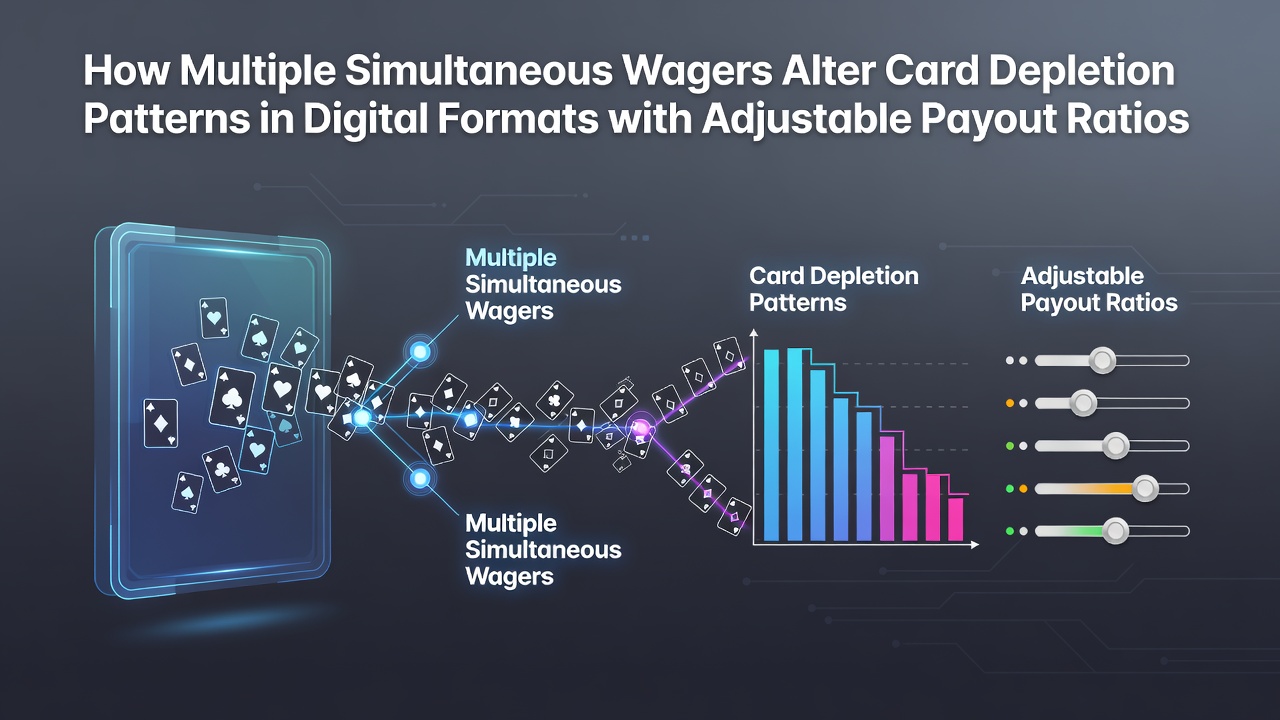
Digital blackjack platforms process multiple simultaneous wagers by drawing from a single shared virtual deck or shoe, and this setup accelerates card depletion compared to single-bet rounds because each hand consumes cards independently yet draws from the same pool. Researchers note that when players activate two or three concurrent bets per round the total cards removed per shuffle cycle rises sharply, which alters remaining deck composition at a faster rate than traditional single-hand play allows. Data from platform analytics indicates that a standard eight-deck virtual shoe reaches its penetration threshold after fewer rounds when multiple wagers operate together, since each wager pair or triple removes up to six cards instead of two or three. Adjustable payout ratios add another variable because platforms modify return percentages mid-session or per table, and these changes often coincide with altered deck management algorithms that respond to aggregate wager volume. Observers report that higher payout settings sometimes pair with reduced penetration to maintain house metrics, while lower ratios permit deeper penetration; the combination means card depletion patterns shift not only from bet volume but also from payout-driven reshuffle triggers. Studies from the International Gaming Institute at the University of Nevada have tracked these interactions and found measurable differences in card distribution frequencies when payout adjustments occur alongside multi-wager sessions.Mechanics of Concurrent Wager Processing
Virtual platforms execute simultaneous wagers by dealing separate hands from the same random number generator sequence or pre-shuffled array, and this parallel dealing consumes cards in clusters rather than sequentially. When three wagers activate at once the system typically removes three player hands plus the dealer hand in one cycle, removing six to eight cards depending on splits and doubles. The reality is that depletion curves steepen because the shoe does not pause between hands; instead, the algorithm advances the pointer through the deck array at triple speed per round.
Adjustable payout ratios interact with these mechanics when the platform recalibrates return percentages based on total wager exposure, and such recalibrations can trigger earlier reshuffles to preserve target margins. Figures from European regulatory filings show that tables with dynamic payout options record 12 to 18 percent faster deck exhaustion under multi-wager conditions than fixed-ratio tables experience. Those who monitor session logs often discover that payout reductions coincide with tighter penetration limits, which compresses the window during which players observe changing card densities.
Observed Shifts in Deck Composition
Multiple simultaneous wagers increase the frequency of high-card and low-card pairings because each round samples the deck more broadly, and this broader sampling reduces the likelihood of prolonged runs of similar cards. Research indicates that the variance in remaining deck richness grows when three or more hands draw concurrently, since the removal process skips fewer intermediate cards than single-wager sequences allow. Analysts at the Australian Gambling Research Centre documented these effects across several licensed digital operators and noted that multi-wager formats produce more uniform distribution of ten-value cards across the remaining shoe after the midpoint.
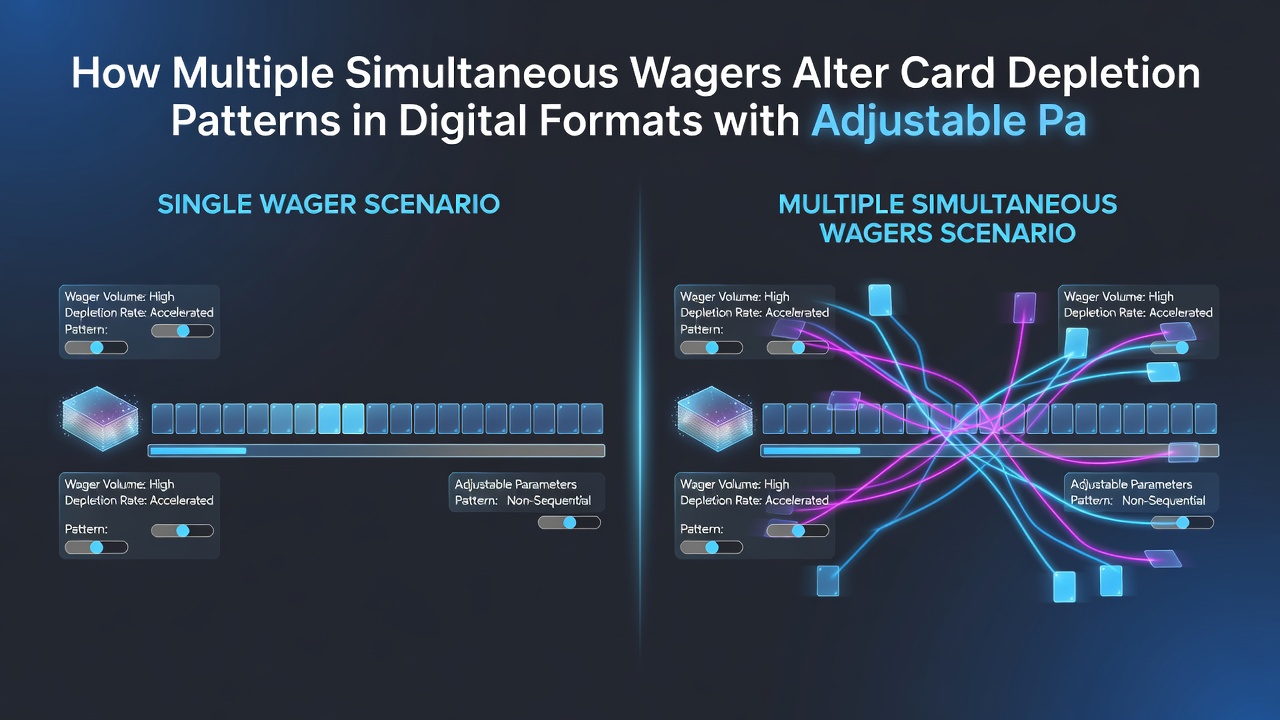 Platform operators adjust reshuffle points in response to aggregate wager patterns, and these adjustments further modify depletion trajectories when payout ratios change. Data shows that a payout increase from 3:2 to 6:5 on blackjack hands often prompts earlier cuts in multi-wager environments to offset the higher return, which shortens the observable deck segment and compresses strategy windows. Canadian provincial gaming reports from 2025 confirm that tables permitting concurrent bets display steeper depletion slopes once payout modifications activate.
Strategic Implications Across Formats
Players who track running counts encounter altered count volatility when multiple wagers operate because card removal happens in larger batches, and larger removals create bigger jumps in true count between rounds. The effect compounds in formats that allow payout ratio toggles, since ratio changes frequently align with deck resets that interrupt ongoing counts. Evidence from simulation studies reveals that count accuracy declines by measurable margins when three simultaneous hands draw from the same virtual shoe compared with sequential single-hand play.
July 2026 updates to several digital licensing frameworks introduced new reporting requirements for platforms that combine multi-wager support with adjustable payouts, and these requirements focus on transparency around depletion thresholds and payout triggers. Regulators in multiple jurisdictions now require disclosure of how concurrent betting volumes influence reshuffle timing, which has prompted operators to publish average cards-per-round metrics for each payout setting. Those metrics demonstrate consistent acceleration of depletion under multi-wager conditions regardless of geographic market.
Conclusion
Digital blackjack environments that permit simultaneous multiple wagers produce faster and more variable card depletion than single-wager formats, and adjustable payout ratios add further complexity by influencing reshuffle decisions and return calculations. Platform data and regulatory filings confirm that deck composition shifts occur more rapidly and with greater variance when players activate concurrent bets, while payout modifications can either compress or extend the usable shoe segment depending on operator policy. Observers continue to examine these interactions as new licensing standards take effect.